Pilates for Hip Imbalance in Zhubei
September 14, 2026
One hip feels tighter than the other, and your body starts to compensate without asking permission. I see this all the time in the studio, and Pilates can help you notice the pattern, breathe into it, and move with more ease.
When someone walks into Cozy Pilates and says, “My right hip always feels tighter,” I usually nod before they finish the sentence. I have heard this in so many forms. One side feels heavy. One side grabs when sitting. One side complains first in lunges, in stairs, in that awkward moment getting out of a car.
It is one of those body stories that sounds small at first, but once you start paying attention, it shows up everywhere. That is why matters so much. It affects how you stand, how you walk, how you breathe, and how much effort your body needs just to feel “normal.”
In my own training, I spent a lot of time noticing how quickly the body tries to help itself. If one hip feels less stable, another area steps in. The low back tightens. The outer thigh works too hard. The foot rolls differently. The body is clever like that, but clever does not always mean comfortable.
Why One Side of the Hip Feels Tighter
Most people expect a tight hip to mean “stretch it more.” Sometimes that helps for a minute. Then the same feeling comes back. That is because tightness is often a signal, not the whole problem.
Common reasons I see in the studio include sitting for long hours, crossing the same leg over and over, standing with most of the weight on one side, old injuries, and poor load sharing between the glutes, deep core, and pelvis. Sometimes the hip is not really short. It is guarding.
A student once told me her left hip felt like a clenched fist. She was doing lots of stretching videos at home, but nothing changed. When we slowed down and watched how she stood, I saw that she always rested into her right leg and let the left side do the stabilizing work. Of course the left hip was tired.
That is why I prefer to look at movement patterns, not just the tight area itself.
How Pilates Helps with Hip Imbalance
Pilates gives us a quiet place to observe. No rushing. No forcing. Just enough feedback to notice what the body does when it feels supported.
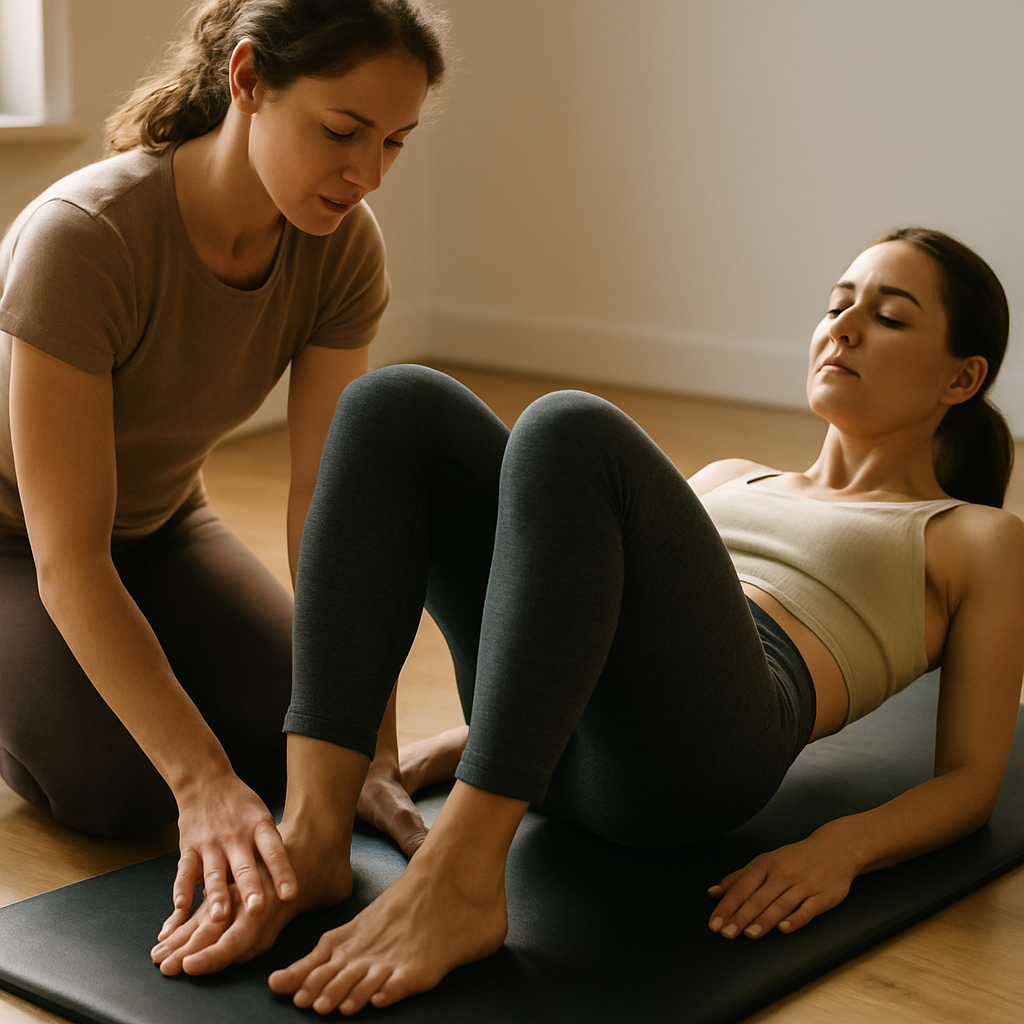
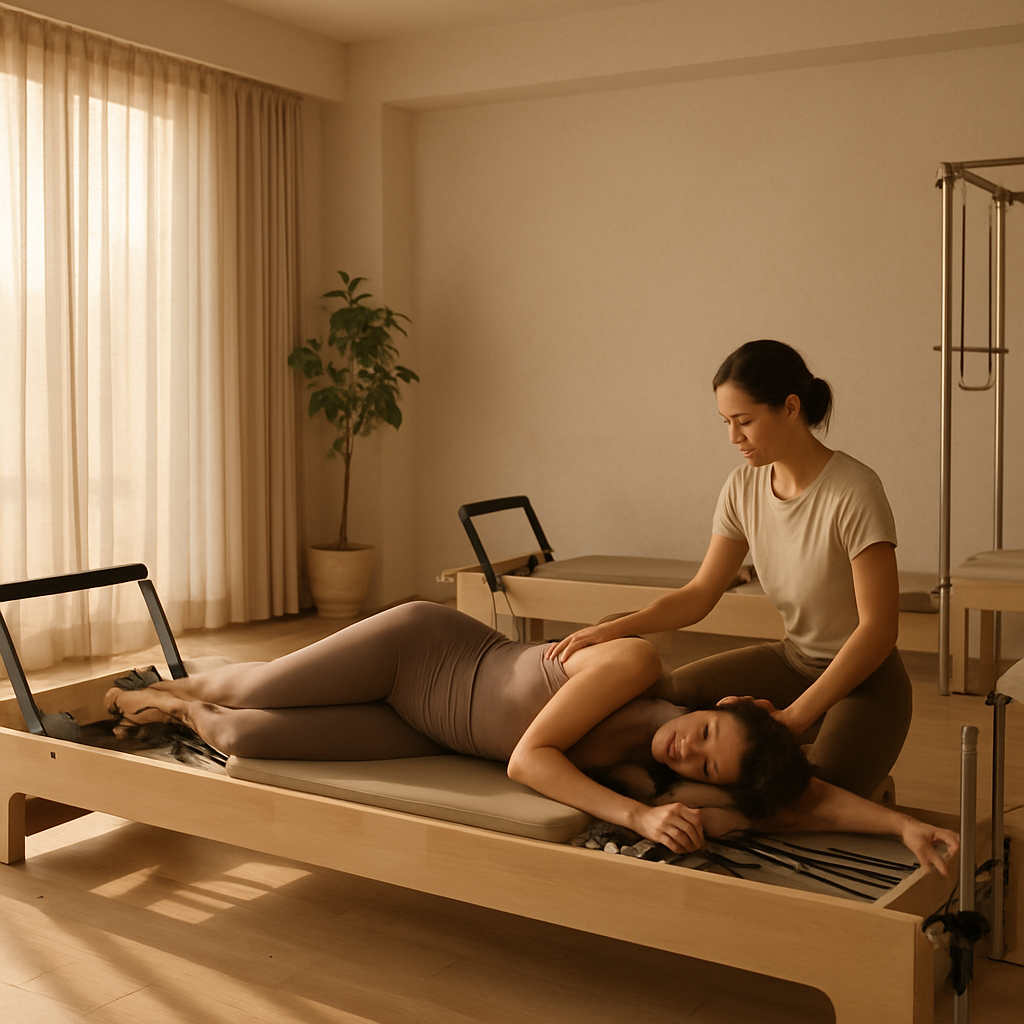
With, I often use exercises that help the pelvis feel more centered and help the two sides share work more evenly. That might mean breathing into the rib cage so the pelvis does not grip so hard. It might mean practicing bridging with attention to weight through both feet. It might mean side-lying work that wakes up the weaker side without letting the stronger side take over.
In the studio, I love watching the moment when a student realizes, “Oh, I am always collapsing into that side.” That small awareness changes everything. Once the body can feel the pattern, it can start choosing something else.
Some of the Pilates principles that matter most here are:
Breathing, because a tight pelvis often goes with shallow, held breath.
Alignment, because the hips respond to the way the ribs, spine, and feet organize around them.
Precision, because tiny differences in setup can change which side works harder.
What We Do at Cozy Pilates in Zhubei
At Cozy Pilates, I never start with a fixed recipe. Two people can both have hip tightness, and their sessions may look completely different. One may need more mobility. Another may need more stability. Another may need to stop chasing the stretch and learn to trust weight bearing again.
For many clients, I begin with simple things like foot placement, pelvic awareness, and gentle mat work. Sometimes we use the Reformer to give the body a clearer sense of resistance and support. Sometimes we stay on the mat because the person needs less stimulation, not more.
Featured snippet style answer: Pilates helps hip imbalance by improving how the pelvis, ribs, and feet share load, which can reduce the feeling that one side is always tighter.
That is also why private sessions can be so helpful. If your body has been compensating for years, a group class can still be useful, but one-on-one work lets me notice the little habits faster. The lifted hip. The turned-out foot. The rib flare that quietly changes everything.
If you are curious about support, you can ask us about private sessions, small group classes, or our studio packages at Cozy Pilates in Zhubei. I like to match the session to the person, not the other way around.
Signs Your Hip Tightness May Be a Compensation Pattern
If you are wondering whether your hip is just stiff or if something deeper is happening, here are a few clues I often notice:
You feel fine after stretching, but the tightness returns the next day.
Your lower back or outer thigh also feels overworked.
You always stand with one hip pushed out.
One leg feels easier to balance on than the other.
You notice the same side getting tired during walking, stairs, or long standing.
If that sounds familiar, you do not need to panic. Your body is not broken. It is trying to organize itself with the tools it has.
A More Comfortable Way to Work with Hip Imbalance
What I love about Pilates is that it invites patience. It asks you to notice, adjust, and try again with less force. That is a very different message from “push through it.”
For, that patience matters. The body often needs time to unlearn the habit of overusing one side. But once the pattern is clearer, even simple exercises can feel surprising. A bridge feels more even. A step feels less lopsided. Standing in line at the tea shop does not make one hip shout at you quite so loudly.
If one side of your hip always feels tighter, I would love for you to stop treating that feeling like a mystery and start treating it like information. That is where change begins, quietly, one breath and one small adjustment at a time.
If you want to explore how we work with this at Cozy Pilates, take a look at our private Pilates lessons, Reformer classes, or intro package. I would be happy to help you listen to what your hips are trying to say.