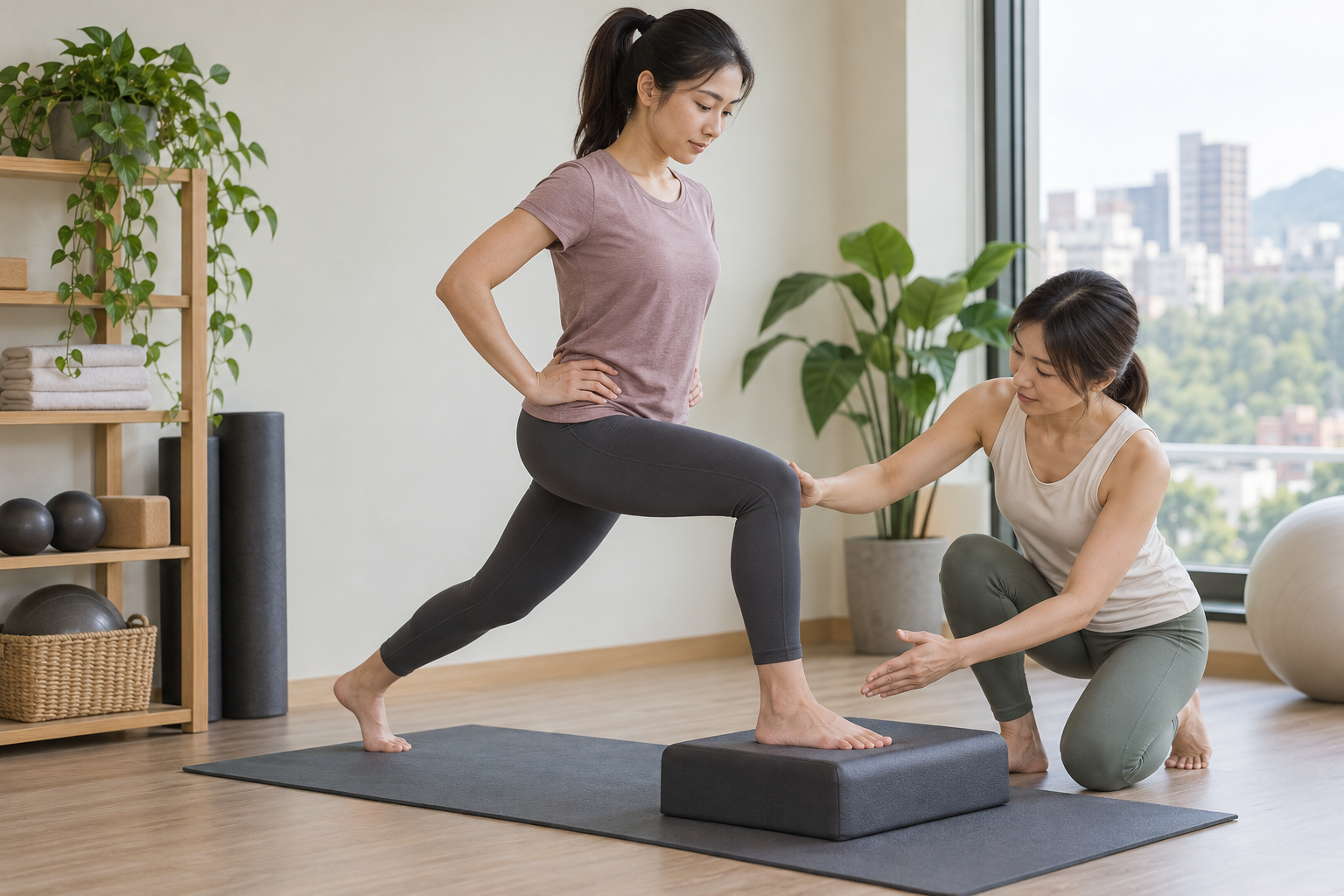
Pilates for Shin Splints in Zhubei
October 28, 2026
If your shins ache after walking, running, or standing for too long, I know how discouraging that can feel. In my studio, I use Pilates to help people improve lower-leg alignment, reduce strain, and walk with more ease.
When the shin starts speaking up
The first time I heard a student say her shins hurt just from walking to the train station, I nodded because I knew that look. Quiet frustration. A body that used to feel simple suddenly feels fussy. In the studio, shin pain often shows up after more walking, more stairs, a return to jogging, or even long days of standing at work. People usually call it shin splints, and many of them arrive already tired of being told to just rest.
I look at the whole chain below the knee. Foot, ankle, calf, knee, hip. If one part is working too hard, the shin can end up taking the blame. is often less about one angry spot and more about how the lower leg is trying to keep you upright.
How Pilates helps with shin splints
What I like about Pilates is that it gives us a calm way to notice details. Not in a complicated way. In a practical way. We can work on foot pressure, ankle mobility, calf control, and hip support without forcing the body to hurry. That matters, because when a person with shin pain tries to “push through,” the muscles around the lower leg often brace even more.
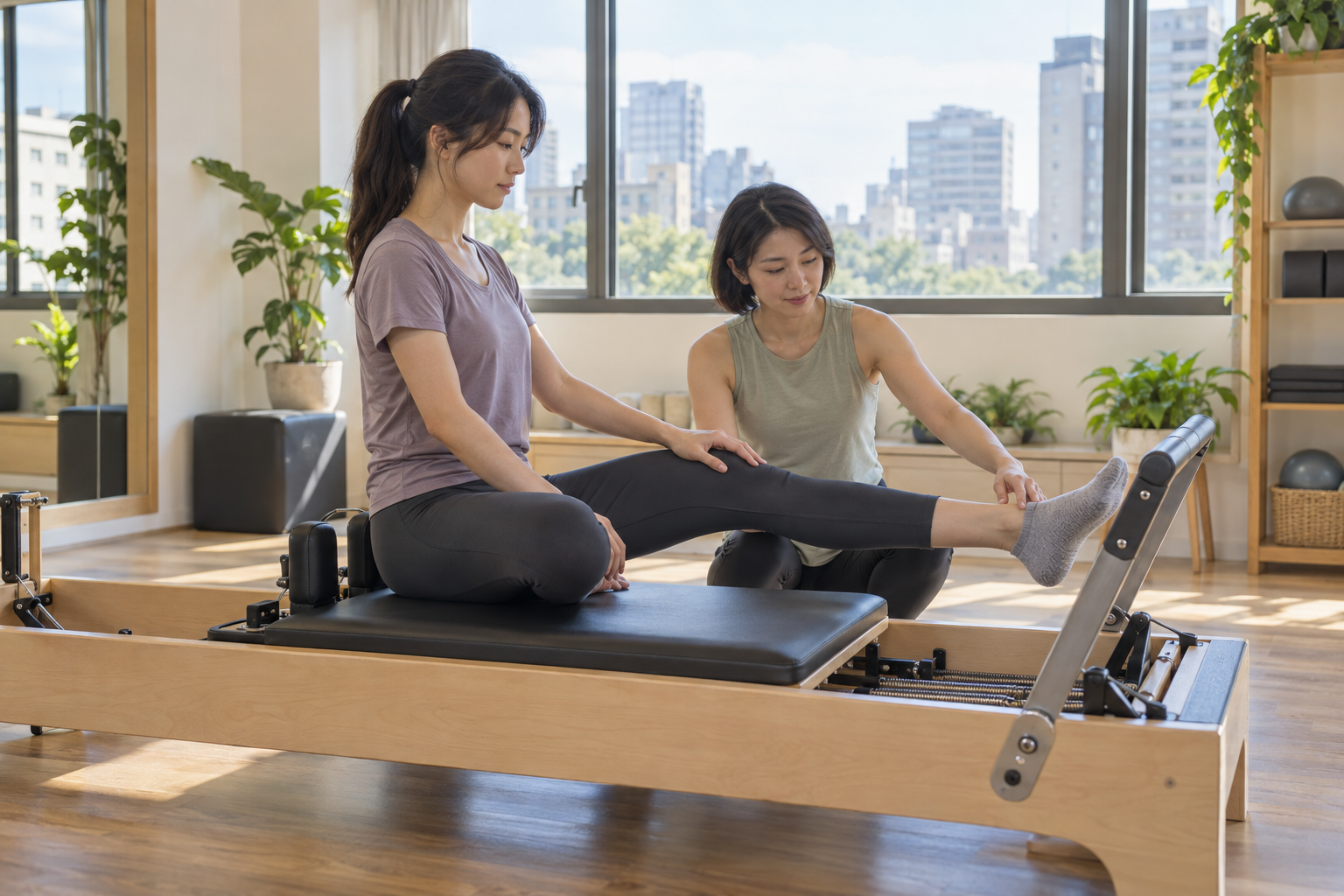
In a Pilates session, I might watch how someone stands on the reformer footbar. Do they dump into the inner arch? Do the toes grip? Does the ankle wobble inward when they step down? Small things, yes. But small things repeat all day long, and that is usually where the discomfort grows.
For many students, Pilates for shin splints becomes a way to build better load sharing. The foot learns to meet the floor more evenly. The calf stops doing everything alone. The hip joins the conversation. Walking starts to feel less like a fight and more like a coordinated movement.
Lower-leg alignment, the part people usually miss
When someone comes in with, I often notice that their lower leg alignment changes the moment they get tired. They may overpronate, lock the knee back, or rotate the thigh inward without noticing it. None of this is dramatic. That is exactly why it sneaks past people for so long.
One of my favorite things to teach is how to stand with the weight spread through the heel, the base of the big toe, and the base of the little toe. Not rigid. Just awake. That simple adjustment can make the shin feel less like it is constantly holding up the rest of the body.
We also work with the calf in both directions, strength and length. A calf that is strong but stiff can pull on the shin. A calf that is loose but weak does not help much either. I like exercises that ask for control on the way up and control on the way down, because walking is full of those little transitions.
What a Cozy Pilates session may include
Every body is different, so I never hand out a fixed recipe. But a session for shin pain may include foot articulation on the mat, gentle heel raises, reformer work that trains ankle stability, and standing exercises that teach the leg to stack better under the body. If the hip is part of the problem, we work there too. If breathing is making the ribs flare and the pelvis tip forward, we address that as well. The body rarely keeps secrets for long once you move slowly enough to notice.
Some students come in worried that any exercise will make things worse. I understand that fear. We move carefully. We test, pause, and adjust. Sometimes the most helpful moment is not the exercise itself, but realizing, “Oh, that is the angle that hurts less.” That kind of discovery matters.
What helps between sessions
If you are dealing with shin discomfort, I usually suggest paying attention to where you feel pressure when you walk. Do your toes claw at the ground? Do your knees collapse inward when you get tired? Are your shoes too soft, too worn, or simply not giving you the support you need? These little observations can be more useful than trying to remember the name of every muscle in the leg.
A few minutes of gentle calf work, slow foot mobilization, and mindful walking can help. But I always say this with care: if pain is sharp, swelling is obvious, or symptoms are getting worse, it is wise to see a medical professional first. Pilates can support recovery, but it is not a replacement for diagnosis when something feels off in a serious way.
Why this matters in Zhubei
Zhubei has its own rhythm. People walk from home to the station, from office to lunch, from one errand to the next. A lot of us spend time on hard floors, in commuting shoes, or sitting too long and then standing up stiff. That is exactly why lower-leg comfort matters here. If your shins hurt, every ordinary day starts to feel bigger than it should.
At Cozy Pilates, I keep the space quiet for a reason. People can pay attention to their feet, their balance, their breathing, and the way their lower leg meets the floor. That attention changes things. Not overnight. But steadily. If you are looking for Pilates in Zhubei and want support for shin splints, you can ask about our private sessions, beginner-friendly classes, or a package that lets us work with your body over time.
can be stubborn, but it is not random. Once we understand how you move, we can help your lower legs carry you with less strain and more confidence.