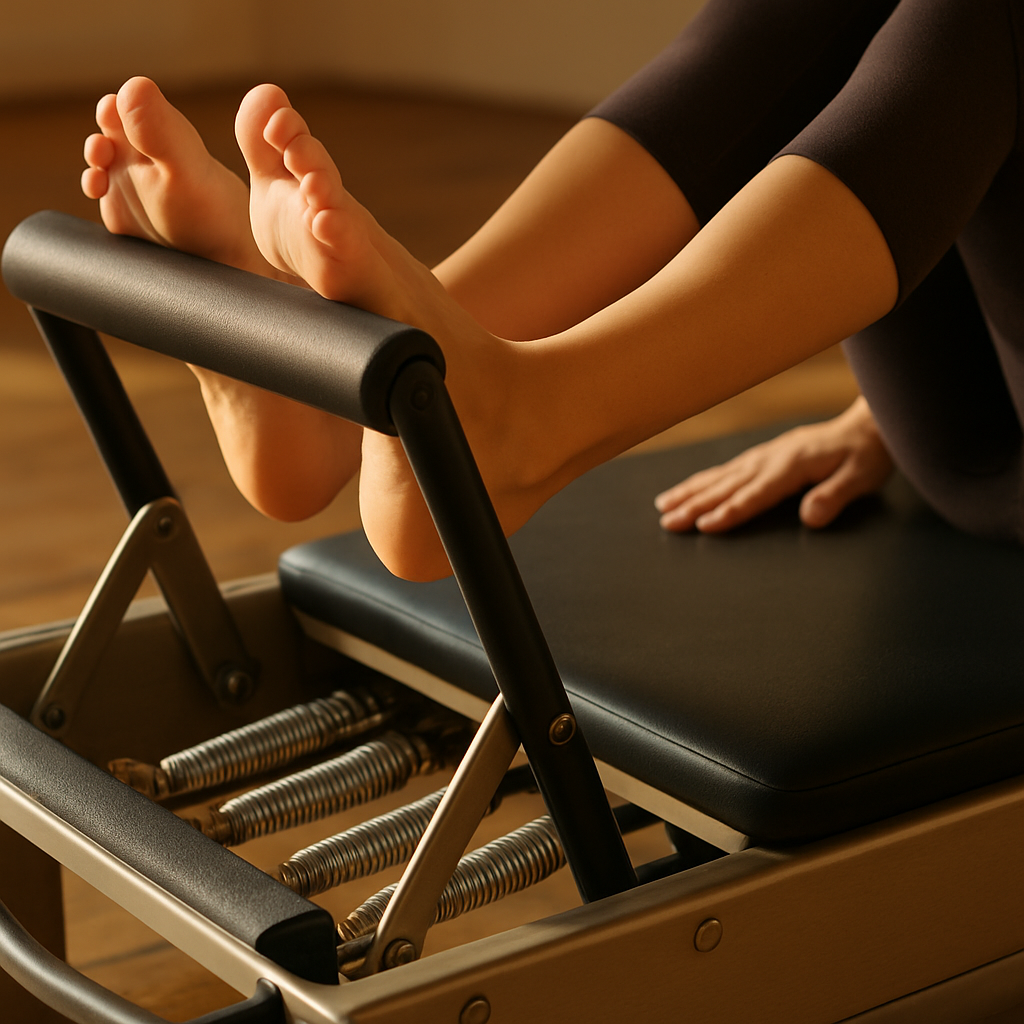
Reformer Pilates for Desk-Related Hip Tightness in Zhubei
August 29, 2026
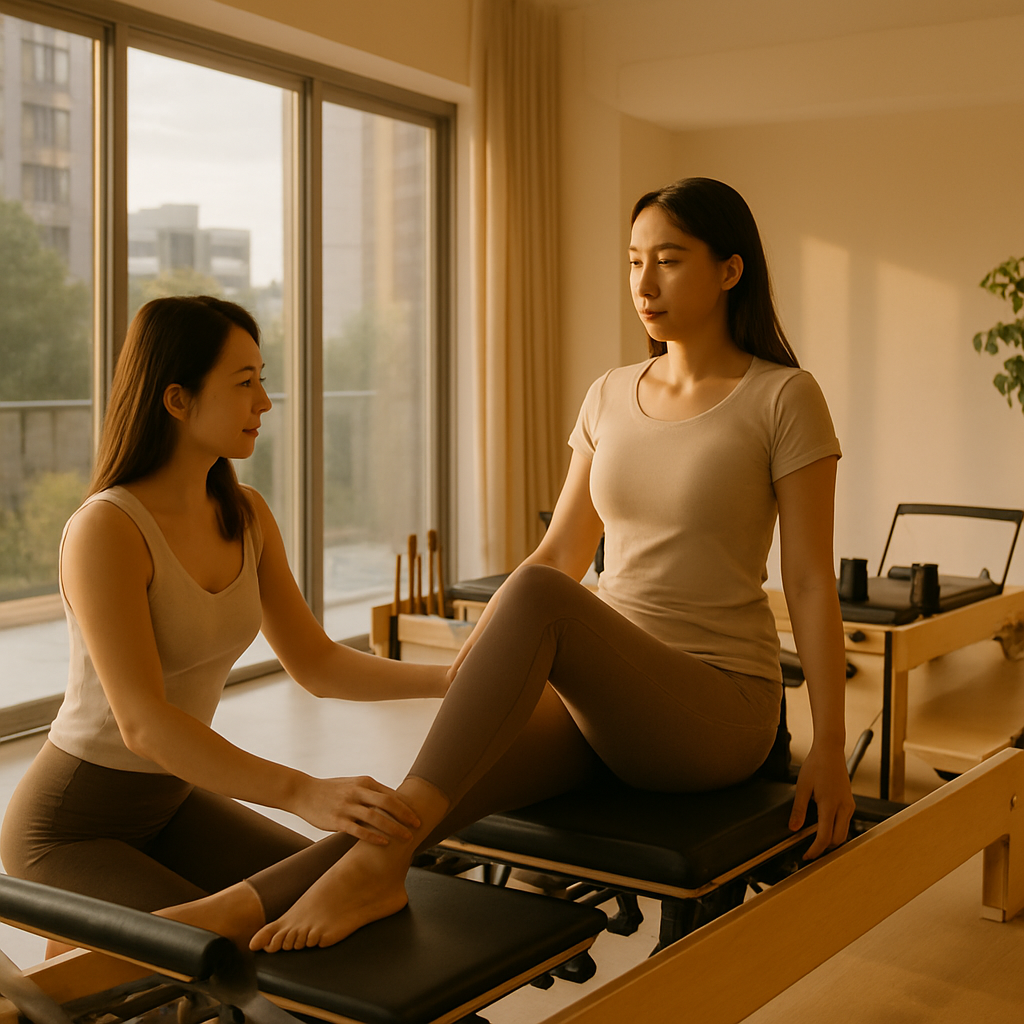
Sitting for long hours can make your hips feel heavy, stiff, and hard to open. I share how Reformer Pilates helps desk-related hip tightness with small, careful movements that feel better in daily life.
People often come to Cozy Pilates after a long week at a desk, one hand on the mouse, shoulders creeping up, hips feeling strangely stuck. They usually tell me the same thing in different words, my hips feel tight, but the feeling is not always in the hip joint itself. Very often, I see hip flexor tightness, a little less pelvis movement, and a body that has been asked to sit still for too many hours in a row.
I know that feeling. I have sat with that same dull, deep tension after too much computer work, and it can make standing up feel oddly effortful. You take a few steps, try to stretch, and nothing really changes. That is usually when Reformer Pilates starts to make sense, because it gives the body a way to move with support, not force.
Why desk work can make the hips feel tight
When we sit for long periods, the front of the hips stays shortened, the glutes are less active, and the spine often settles into one shape for too long. For many people in Zhubei, this comes with commuting, office work, and then more sitting at home. The body stops changing position enough, and the nervous system begins to treat that shape as normal.
I see this a lot in the studio. A software engineer comes in after ten hours at a screen. A new mother returns to movement and says sitting on the floor with her child feels uncomfortable. Someone else works in sales and spends the whole day driving between meetings. Their stories are different, but the pattern is similar. The hips are not lazy. They are adapting.
How Reformer Pilates helps with hip flexor tightness
Reformer Pilates gives us spring resistance, a moving carriage, and support under the feet or back. That support matters. Instead of forcing a big stretch, we can explore small ranges of motion, breathing into the ribs, and teaching the pelvis to move more clearly. With Reformer Pilates, the muscles around the hips get a chance to work and release in a more balanced way.
When I work with someone who has hip flexor tightness, I often start with simple footwork, pelvic articulation, and gentle bridging. These exercises help the hips feel supported while the front of the body lengthens in a way that is active, not passive. That distinction matters. Passive stretching can feel nice for a moment, but if the body does not learn a better pattern, the tightness returns by the next workday.
On the Reformer, we can also use exercises that ask one leg to move while the other side stays stable. That single-leg control is very revealing. Sometimes the hip feels tight because the pelvis is not steady enough. Sometimes the rib cage is doing too much. Sometimes the breath is shallow and the whole trunk feels braced. These are small details, but they change how the hips behave.
What I notice in the studio
There is a very specific moment I see often. A student lies down, the springs begin to move, and after two or three breaths their face softens. The lower back stops gripping so hard. The front of the thighs quiet down. You can almost hear the body say, oh, this is different.
One student told me she had been stretching her hip flexors every night for months. She did the same kneeling stretch, held it longer each time, and still felt the same pulling when she stood up from her desk. We changed the approach. Less pushing. More control. More attention to how she breathed while moving. A few weeks later, she noticed she could get out of her chair without that sharp, grabbing feeling in the front of her hips. That is the kind of progress I love. Quiet, practical, real.
Simple signs your hips may need more than stretching
If you are wondering whether your own tight hips are related to sitting, these signs are common:
1. You feel stiff after standing up from your desk.
2. Your lower back takes over when you try to stretch your hips.
3. Lunge stretches feel intense at first, then the tightness returns quickly.
4. Your glutes feel hard to switch on during exercise.
5. You sit a lot and notice the front of the hips pulling or pinching.
If this sounds familiar, a class that focuses on Reformer Pilates can be a better fit than random stretching videos. The goal is not to chase flexibility for its own sake. It is to help your body feel more usable again.
How to begin at Cozy Pilates in Zhubei
At Cozy Pilates, I like to start with where your body is today, not where you think it should be. Some people need more attention to breathing and rib mobility. Some need help waking up the glutes. Some need to reduce the effort in the hip flexors because the front of the body is doing too much. Every session is adjusted, because a desk body is not a generic body.
If you are in Zhubei and your hips feel tight after work, you might begin with our Reformer Pilates classes. If you want more individual attention, a private session package can help us look at your alignment, your breathing, and the habits that show up when you sit, stand, and walk. You can also learn more about the studio on our studio page.
I have found that hips change when the whole system gets a little more honest. Not by forcing them open. By giving them better choices. That is what I keep coming back to in the studio, and why I trust Reformer Pilates for desk-related hip flexor tightness so much.