Reformer Pilates for Neck and Shoulder Tension After Baby Carrying
September 13, 2026
Carrying a baby can leave the neck and shoulders feeling heavy, tight, and oddly tired. I share how Reformer Pilates can help you move with more ease, one small breath at a time.
Why baby carrying shows up in the neck and shoulders
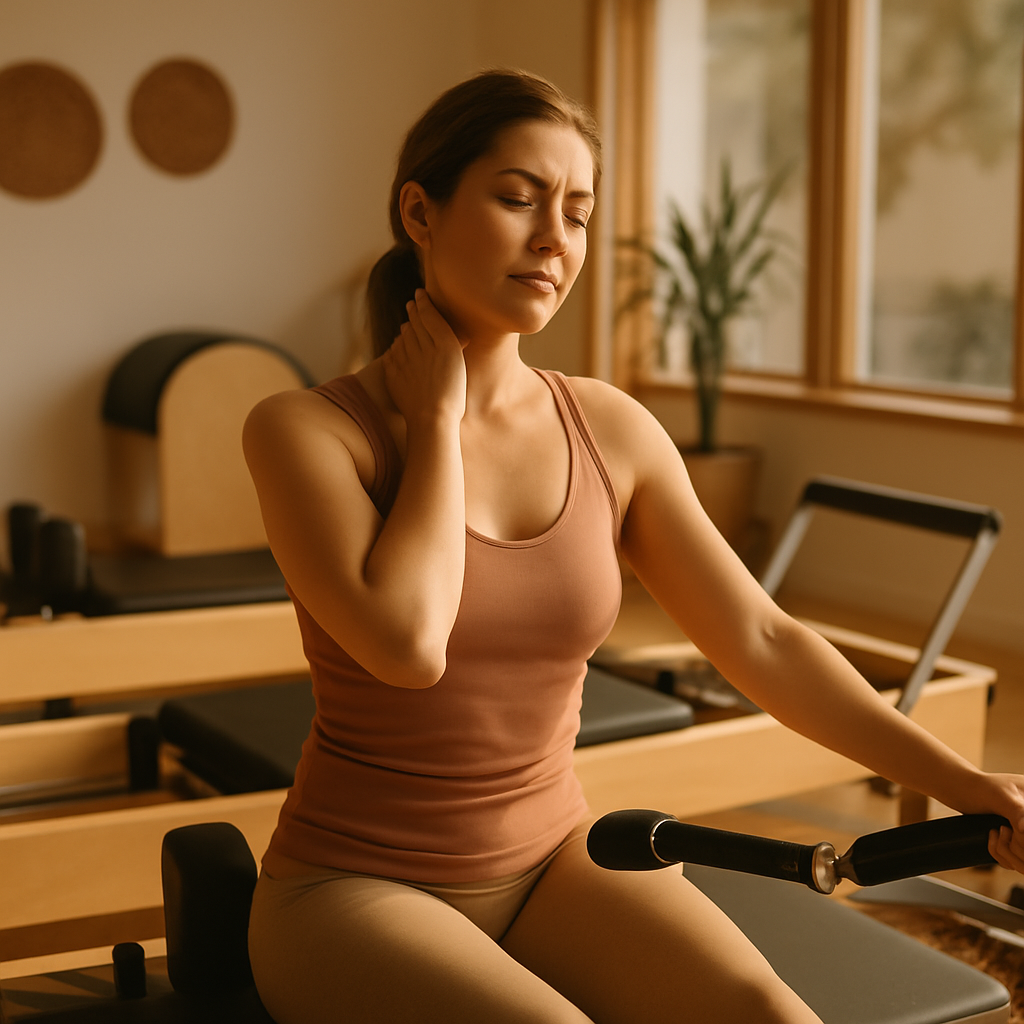
I see this pattern all the time in the studio. A new parent walks in, one shoulder slightly higher than the other, chin jutting forward, arms feeling a little too ready to lift and hold. They usually do not say, my neck hurts from carrying my baby at first. They say, my shoulders are always tight or I feel stiff when I turn my head.
That makes sense. Babies are heavy in a very specific way. You hold them on one side, rock them while standing, feed them in awkward positions, then scoop them up again before your body has fully reset. Your neck starts helping more than it should. Your upper traps stay switched on. Your rib cage gets a little locked. Breathing becomes shallow without you noticing.
For many clients, is not just muscle tightness. It is fatigue, repeated positions, and a body that has not had much chance to reorganize after birth. Sometimes the shoulder tension is linked to carrying the baby. Sometimes it is feeding posture, sleep deprivation, or simply being touched out and tense all day. Usually it is all of that together.
How Reformer Pilates supports postnatal shoulder tension
I like Reformer Pilates for this because the machine gives feedback. The carriage moves, and your body has to meet that movement without gripping too hard. That little bit of spring resistance can wake up the muscles that have gone quiet, especially around the ribs, shoulder blades, and deep neck stabilizers.
When someone comes in with, I do not start by chasing the pain spot. I look at the whole pattern. How is the breath moving? Are the ribs flaring? Is one side of the chest tighter? Are the shoulders riding up near the ears? The Reformer helps us slow down enough to notice these habits.
Often, the first relief comes from simple things, like learning to let the exhale soften the front of the chest, or finding support through the upper back instead of hanging everything in the neck. One of my favorite moments is when a student says, almost surprised, Oh, my shoulders just dropped. It is quiet. Small. But you can feel it in the room.
Gentle Reformer Pilates exercises I often use
For postnatal clients, I keep the work precise and respectful. No rushing. No forcing the body to look a certain way. I usually begin with breathing on the Reformer, then add movements that help the shoulder blades glide and the upper back wake up.
Some of the exercises I often choose include footwork for overall alignment, arm series with light springs, elephant for length through the back body, and very controlled rowing patterns when the neck is ready. If the body is still healing, I may keep things even simpler and spend more time on scapular awareness and rib mobility.
A simple starting sequence may look like this:
1. Supine breathing with hands on the ribs, to feel the back and side ribs expand.
2. Arm presses with light springs, keeping the shoulders away from the ears.
3. Small shoulder blade slides, so the upper back works without neck gripping.
4. Gentle hamstring and hip work, because the body never changes one area alone.
I am careful here. If someone has pelvic floor symptoms, abdominal separation, pain that shoots into the arm, or ongoing headaches, I adjust the session and may suggest checking in with a qualified medical professional or postnatal therapist too.
What to expect in a Cozy Pilates session
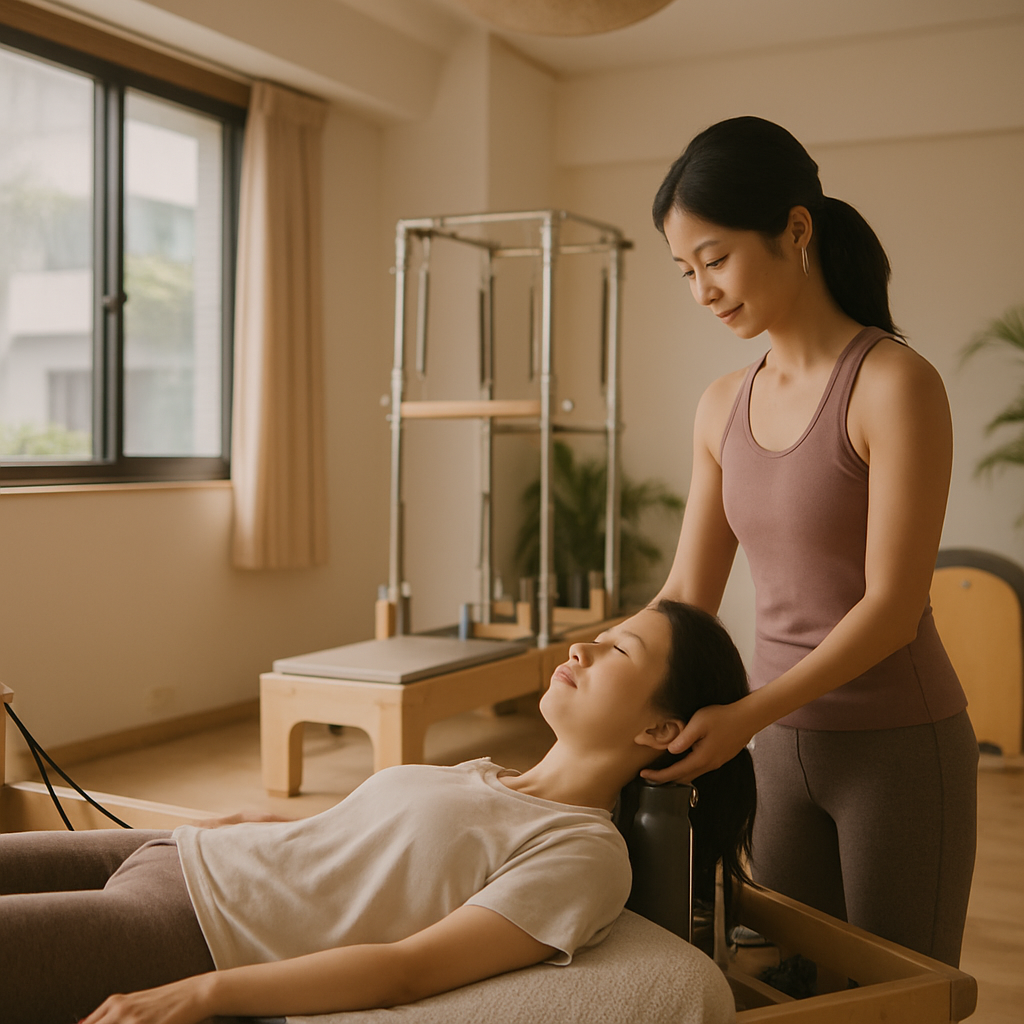
At Cozy Pilates in Zhubei, I keep the room calm on purpose. Soft light, steady breathing, and enough time to notice what is happening in your body. New parents are often running on very little sleep, so I do not want class to feel like another thing to perform.
When we work on, I usually begin by asking where the tension lives today. Maybe it is the base of the skull. Maybe it is one shoulder blade. Maybe the whole front of the chest feels stuck from feeding and carrying. Then I adapt the springs, the pace, even the range of motion.
If you are looking for a class that fits your current body, our Reformer Pilates classes and small private sessions are both good options. If you want more support after birth, I often recommend starting with a few private lessons before joining a group class. That gives us room to work on technique, breath, and the little habits that make a big difference later.
Small changes that matter during daily baby care
Class is one piece. The rest happens in the moments between feeds, naps, and diaper changes. I always tell clients to notice how they pick up the baby. Do they reach with one shoulder all the time? Do they hold their breath when they lift? Can they rest one arm on a pillow while feeding?
These tiny adjustments matter more than people expect. The body loves repetition, which is also why it gets tired from repetition. A better standing habit, a calmer exhale, a more supported feeding position, these can all ease without adding another complicated routine to your day.
If your shoulders have been carrying the load, literally and emotionally, there is room to help them soften. Reformer Pilates can be a gentle place to start, especially when your body needs support more than intensity.
If you want to try a session, take a look at our studio page for class details, or reach out about a private assessment. I would be happy to meet you where you are, baby sleep schedule and all.