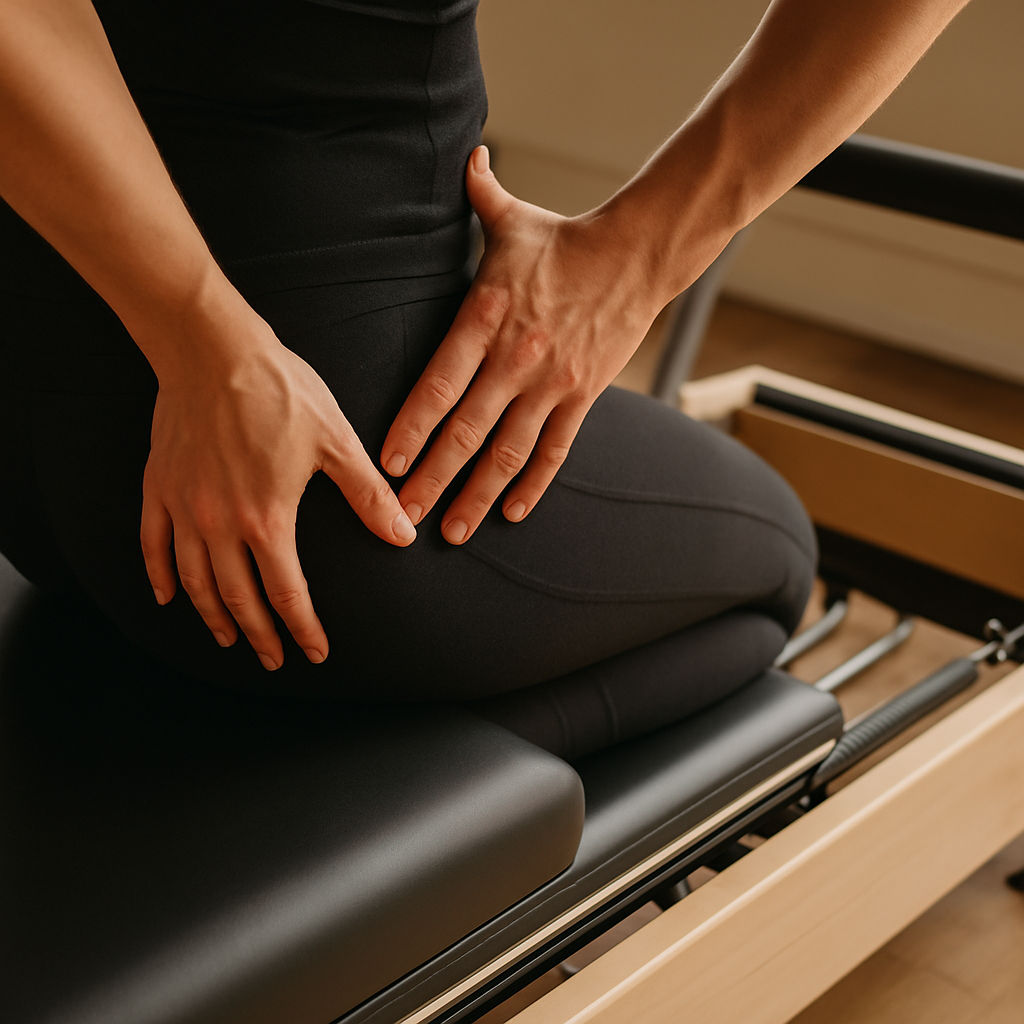
Reformer Pilates for Pelvic Tilt in Zhubei
September 22, 2026
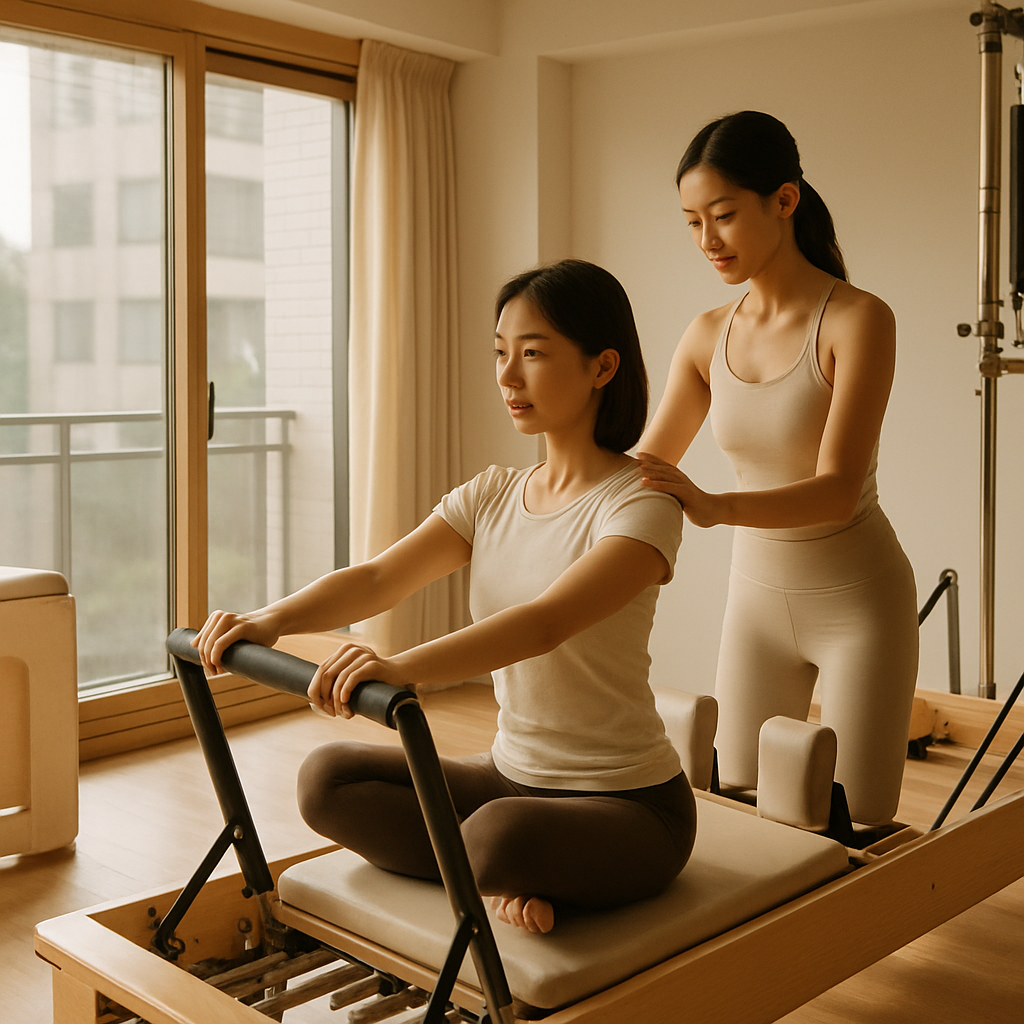
If your lower back feels busy all day and your pelvis seems to tip forward no matter what you do, Reformer Pilates can help you notice what your body is doing. At Cozy Pilates Studio in Zhubei, I use small, careful cues to help students build steadier support from the inside out.
When someone first tells me their lower back feels tight all the time, I usually ask them to stand still for a second. Not because I want to test them. I just want to see how they carry themselves before they start trying to fix anything.
Quite often, I notice the same pattern. The ribs drift forward, the pelvis tips, the hips work too hard, and the person feels like they are always bracing. In many cases, that shape is what people mean when they talk about pelvic tilt, and in the studio, the phrase I hear most often is.
At Cozy Pilates Studio in Zhubei, I meet a lot of people like this. Teachers, office workers, new mothers, runners, people who sit for long hours in Hsinchu traffic and then wonder why their back feels compressed by evening. They do not all need the same fix. That part matters. But Reformer Pilates can be a very helpful place to begin, because the spring resistance gives feedback that a mat alone sometimes cannot.
What pelvic tilt can feel like in daily life
is one of those phrases that gets thrown around a lot, almost too easily. I prefer to look at what the body is doing. Is the front of the hips gripping? Do the glutes feel asleep? Does the lower back feel like it is always carrying the work?
People usually describe it in simple ways. Standing for a while makes their lower back ache. Their belly seems to relax forward even when they try to “stand up straight.” Squats feel awkward. Bridges cramp in the hamstrings. Sometimes they can never find a comfortable neutral position on the chair, in the car, or on the floor with their child.
Common signs I see in the studio:
Lower back tension that returns again and again
Hip flexors that feel tight when the leg is behind the body
Glutes that do not seem to switch on easily
Rib flare or a feeling of the chest lifting away from the pelvis
Difficulty feeling the pelvis move without the whole back arching
Why Reformer Pilates can help with pelvic tilt
The Reformer is useful because it gives you resistance and support at the same time. That mix is important. A person with often knows they are “out of alignment,” but they do not yet know how to change it without gripping harder. Springs can help slow things down.
On the carriage, I can see the difference between effort and strategy. If a student pushes with the legs but the ribs pop up, I know the body is borrowing stability from somewhere else. If the pelvis keeps dumping forward during footwork, I can adjust the foot position, reduce the spring load, or change the tempo so the student can actually feel the work in the right place.
That is why I like teaching on the Reformer. It gives me room to observe. It gives the student a chance to feel their body with more detail. And often, that is the missing piece.
What I look for during a session
I do not start by telling someone to “tuck the pelvis” and hold it there. That tends to create a stiff, fake shape. Real change is quieter than that.
Instead, I watch how the breath moves through the ribcage. I watch whether the student can soften the front of the hips without collapsing into the waist. I watch whether the heels, hamstrings, and glutes can share the work in a footwork series. On the right day, I might ask for a tiny pause at the top of a bridge. Not to make it harder. Just to let the nervous system notice where the effort is going.
Sometimes the most helpful cue is tiny. “Let your thigh bones be heavy.” “Exhale and feel the back of your ribs widen.” “Keep the front of your hips quiet for one more breath.” Those kinds of cues sound almost too simple, but they usually land better than a long explanation.
Exercises I often use for pelvic tilt support
Reformer Pilates for is never one single exercise. I usually build from easy to more demanding work, and I change the order depending on the person in front of me.
Footwork is often where I begin. It shows me how the legs organize under load. If the pelvis tilts forward the moment the legs press out, I know we need more awareness before intensity.
Bridging helps people feel the difference between moving from the hips and hanging in the lower back. On the Reformer, the carriage gives honest feedback. If the ribs flare or the neck tightens, it is right there.
Leg straps can be surprisingly useful for people with pelvic tilt, especially when they need help finding length without gripping the hip flexors. The challenge is not to throw the legs around. The challenge is to keep the trunk calm while the legs move.
Kneeling and standing work matter too. A body does not live on the carriage alone. If someone can find better support in half-kneeling or standing series, that new pattern starts to show up in daily life, like getting up from a low chair or walking up stairs.
What progress usually looks like
People often expect a dramatic change. I understand that. When your back hurts, you want relief quickly. But with pelvic tilt, the wins are usually small and layered.
One day a student says, “My lower back did not grab during footwork.” Another day, they notice they can stand in the kitchen for twenty minutes without shifting side to side. Someone else tells me they finally feel their glutes during bridges instead of just their hamstrings.
That is real progress. Not dramatic, but real.
And if you are dealing with, I want to say this gently, you do not need to force your body into a perfect posture. I see better results when people learn to move with more awareness, less gripping, and a bit more patience.
If you are in Zhubei and this sounds familiar, a private session or a small class can be a good place to start. At Cozy Pilates Studio, I also offer different class options and packages, so we can choose the pace that fits your body right now. Sometimes the first step is simply having someone look at your movement and say, “Yes, I see what is happening.” That alone can be a relief.
If you want support for pelvic tilt in a quiet, careful setting, Reformer Pilates may be a very good fit.