If You Have Tight Hips in Zhubei: Yoga Stretching or Reformer Pilates?
April 30, 2026
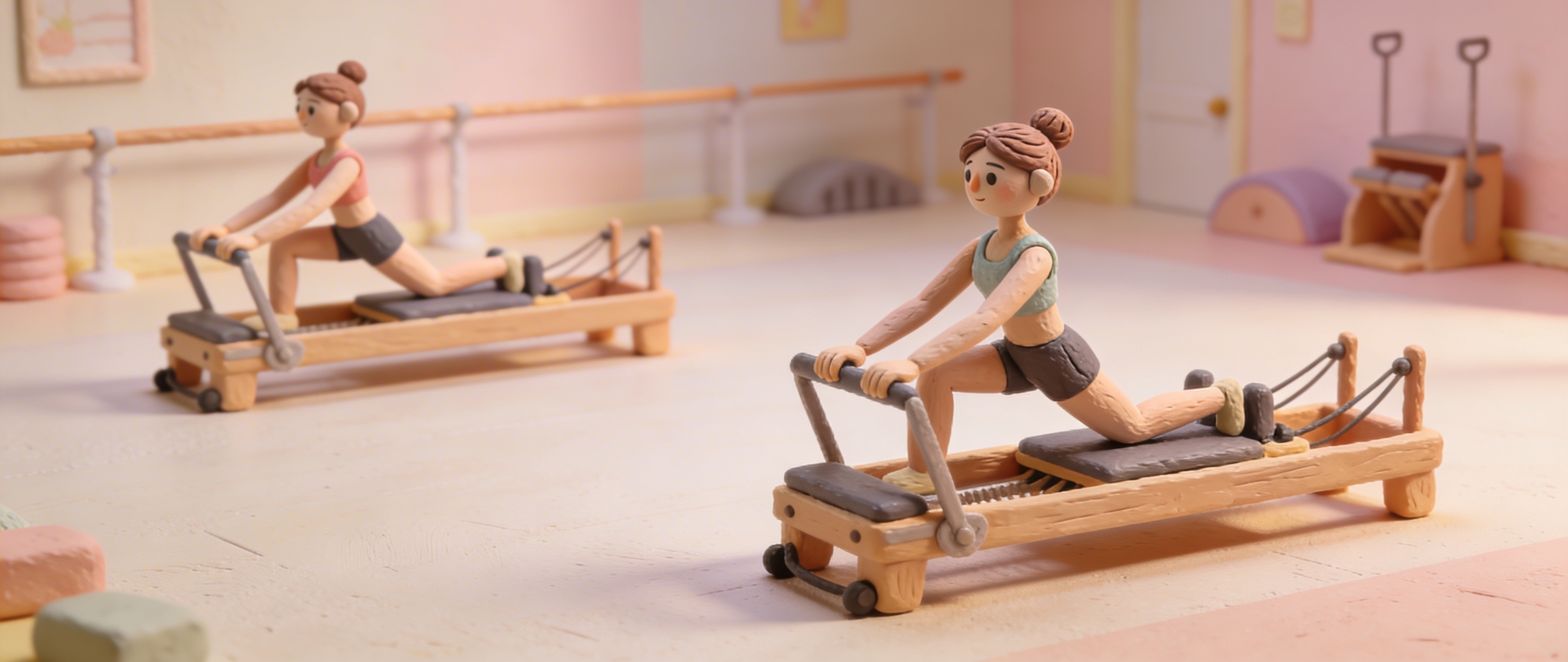
Struggling with tight hips in Zhubei? Compare yoga stretching and Reformer Pilates to see which method improves mobility, posture, and lower back comfort more effectively.
If You Have Tight Hips in Zhubei: Yoga Stretching or Reformer Pilates?
You don’t notice your hips… until they start limiting everything.
Sitting cross-legged feels uncomfortable. Walking long distances makes your lower back tight. Even getting out of the car feels slightly stiff. If you live or work in Zhubei and spend hours at a desk, this probably sounds familiar.
So the logical question appears:
Should I stretch more? Or should I strengthen differently?
In other words — yoga or Reformer Pilates?
Let’s unpack it.
Why Tight Hips Happen in the First Place
Most hip tightness isn’t random. It builds slowly.
Long hours sitting shorten the hip flexors. Glutes gradually become less active. The pelvis starts tipping forward slightly. The lower back begins doing more work than it should.
At first, it just feels like stiffness.
Later, it turns into discomfort.
And eventually, it affects posture.
So the real issue isn’t only “tightness.” It’s imbalance.
What Yoga Stretching Does for Tight Hips
Yoga can feel incredible for tight hips.
Deep lunges, pigeon pose, wide folds — they open the front and outer hip in ways daily life rarely does. After class, many people feel looser and lighter.
If your hips are simply stiff from inactivity, stretching may provide immediate relief.
But here’s the part most people don’t consider.
If the hip is tight because the surrounding muscles are weak or poorly coordinated, stretching alone may not hold the change. The body tends to return to its default pattern.
You feel better temporarily. Then it tightens again.
That cycle is common.
How Reformer Pilates Approaches Tight Hips
Reformer Pilates doesn’t usually start with “let’s pull it longer.”
It starts with, “Why is this hip gripping in the first place?”
Often, hip tightness is the result of:
Weak glutes
Delayed deep core activation
Limited pelvic control
Restricted thoracic movement
When those elements are retrained, the hip no longer needs to protect or compensate.
On the Reformer, the springs create resistance that helps you strengthen through range, not just stretch into it. You learn to move the hip with control — flexion, extension, rotation — while maintaining pelvic alignment.
Over time, that controlled strength creates mobility that lasts longer.
The Back Pain Connection
Many people in Zhubei who complain about tight hips also mention lower back tension.
That’s not a coincidence.
When hips lose mobility or stability, the lower back absorbs the extra load.
Stretching may reduce the tension temporarily. But rebuilding hip control often reduces the root stress.
That’s why some people notice that after several Reformer sessions, their hips feel freer — even though they didn’t “stretch more” than usual.
So Which One Should You Choose?
If your hips feel stiff but your posture is stable and you don’t experience recurring back pain, yoga stretching can be helpful.
If your hips feel tight and you also notice lower back discomfort, pelvic imbalance, or instability, Reformer Pilates may provide a more lasting solution.
Some people benefit from both. Stretch for openness. Strengthen for control.
But if you’re trying to fix recurring tightness rather than just relieve it, strengthening and coordination tend to matter more than passive stretching.
If you’d like to understand how Reformer Pilates can improve hip mobility and posture in Zhubei, you can explore our sessions here:
https://cozypilates.com/en/packages