Yoga vs Reformer Pilates: Which Builds Stronger Core Stability?
April 12, 2026
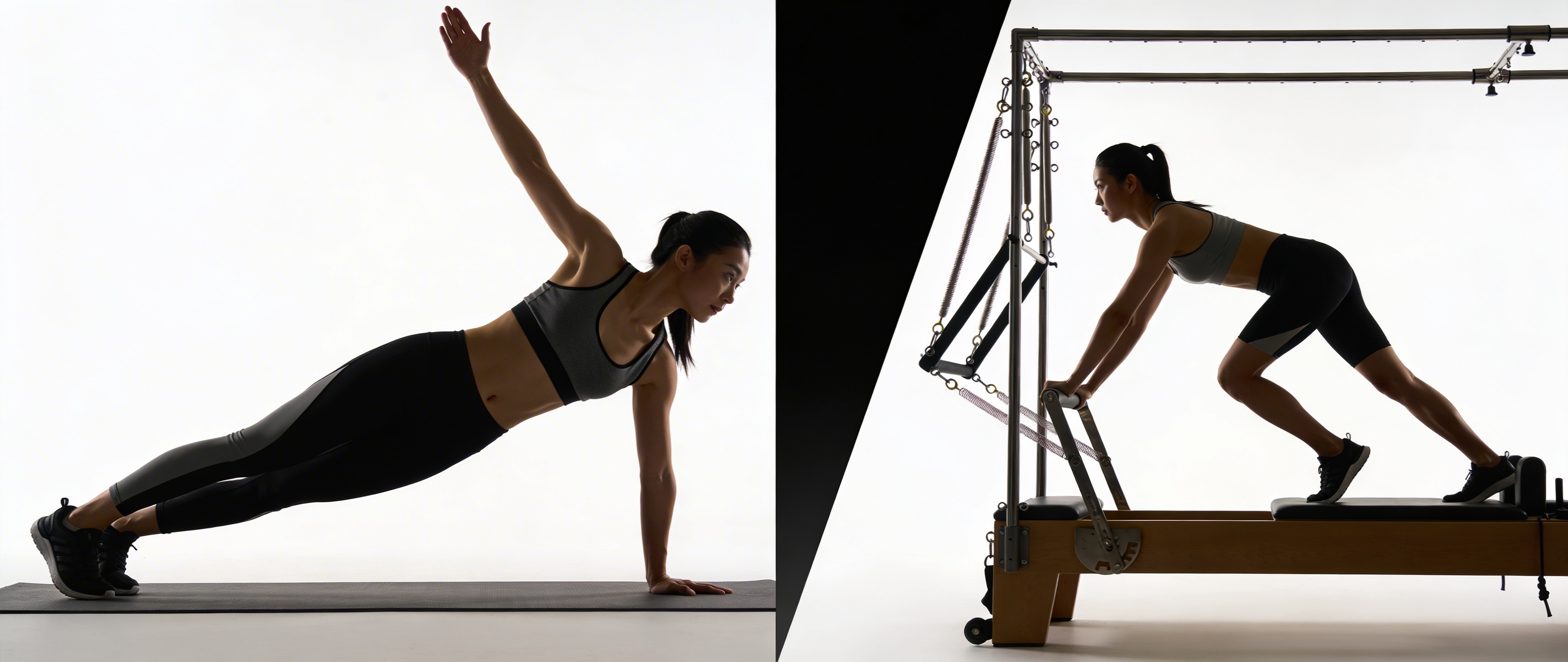
Wondering whether Yoga or Reformer Pilates builds stronger core stability? Discover the real differences in control, posture support, and back protection.
Yoga vs Reformer Pilates: Which Builds Stronger Core Stability?
Most people don’t wake up thinking, “I need better core stability.”
They wake up thinking, “Why does my lower back feel tired again?”
Or, “Why do I feel wobbly when I stand on one leg?”
Or even, “Why do I feel strong at the gym, but unstable in daily life?”
That’s usually when the word “core” enters the conversation.
In Zhubei, the comparison often comes down to two options: Yoga or Reformer Pilates.
Both look controlled. Both feel intentional. Both promise strength.
But they build stability in very different ways.
What Yoga Does for the Core
Yoga absolutely strengthens the body. Holding plank, warrior poses, or side balance shapes challenges endurance and body awareness.
You feel your abs working. You feel the shake. You breathe through it.
Yoga builds a kind of global strength — the whole body engaged together, often in static positions. It improves flexibility and teaches you how to move with awareness.
But here’s something subtle.
Many yoga poses demand strength, yet they don’t always isolate deep stabilizers. If your lower back tends to overwork or your ribs flare when you lift your arms, those compensations can quietly remain.
You might feel stronger… but not necessarily more supported.
How Reformer Pilates Builds Core Stability
Reformer Pilates approaches the core almost like a quiet engineer.
Instead of asking, “Can you hold this pose?” it asks, “Can your deep muscles activate at exactly the right time?”
The springs create resistance that pushes back. If your pelvis tilts or your ribs shift, the carriage tells you immediately. There’s no hiding.
You’re not just bracing your abs. You’re coordinating:
Breath with movement.
Pelvis with rib cage.
Hips with spine.
It’s subtle. Sometimes almost frustratingly precise. But that precision is what creates stability that carries into daily life.
When done consistently, you notice small things first.
Standing feels lighter.
Sitting feels less compressed.
You don’t instinctively grip your lower back when lifting something.
That’s core stability — not just strength.
The Feeling Difference
Yoga often feels expansive. Stretching. Lengthening. Flowing.
Reformer Pilates feels controlled. Balanced. Supported.
Neither is wrong.
But if your goal is deep structural stability — especially if you’ve experienced back pain or feel unstable in your pelvis — Reformer Pilates usually provides more direct retraining of the stabilizing system.
So Which Should You Choose?
If you love movement flow and want endurance with flexibility, yoga can absolutely strengthen your body.
If you want to rebuild the quiet muscles that protect your spine, improve posture, and reduce that “tired back” feeling at the end of the day, Reformer Pilates often goes deeper.
Some people combine both. But when core stability is the main goal, precision tends to matter more than intensity.
If you’re curious how Reformer Pilates could support your core stability in Zhubei, you’re welcome to visit us at Cozy Pilates, 675, No. Section 1, Dongxing Road, Zhubei City, Hsinchu County 302.
You can also call us at 0919919034 to ask more about classes or book online through our website:
https://cozypilates.com/en/packages